
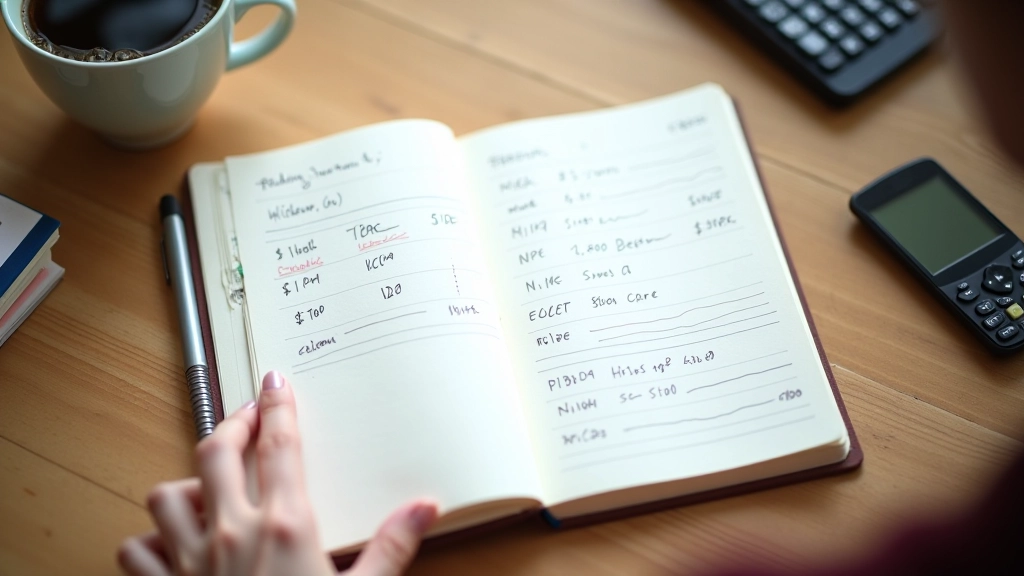
Starting Your First Spending Journal
Learn how to set up a simple daily expense tracker and what information to record for maximum insight.

Why Track Every Single Purchase?
You’ve probably noticed that money disappears. One day you’ve got $500 in your wallet, and a week later it’s gone. But where exactly did it go? Was it the bubble tea, the MTR top-ups, the lunch runs, or something else entirely?
That’s where a spending journal comes in. It’s not about budgeting or restricting yourself — it’s about awareness. When you write down every purchase for just one month, something clicks. You start seeing patterns. You realize that four bubble teas a week adds up to nearly HK$300 monthly. The daily coffee runs? That’s another HK$150. The small purchases you barely remember suddenly become visible.
Here’s the thing: awareness naturally leads to better choices. You don’t need willpower or guilt. Once you see where your money’s actually going, you’ll make different decisions without forcing yourself.
Setting Up Your Journal
You don’t need anything fancy. Seriously. A simple notebook and a pen work perfectly. Some people use their phone’s notes app. Others prefer a small pocket notebook they carry everywhere. The format doesn’t matter — consistency does.
Here’s what you’ll need to record for each purchase:
- Date — So you can spot weekly or daily patterns later
- Amount — The exact price you paid
- Category — Food, transport, entertainment, shopping, etc.
- Description — “Bubble tea at Tiger Sugar”, “MTR top-up”, “lunch at Tsui Wah”
- Payment method — Cash, Octopus, Payme, or credit card
That’s it. Five pieces of information. The payment method is particularly useful because you’ll start noticing whether you spend differently depending on how you pay. Many people spend more freely with digital payments than cash — and tracking this helps you understand your own behavior.
This Is About Awareness, Not Judgment
This article is purely educational. It’s designed to help you understand your spending patterns through self-observation. We’re not saying you shouldn’t enjoy bubble tea or eat lunch out. We’re saying that knowing what you spend helps you make intentional choices. Different circumstances call for different approaches — there’s no one-size-fits-all answer.
The First Week Is the Hardest
Let’s be honest — remembering to write down every purchase feels annoying at first. You’ll forget a couple of times. You’ll buy something and only remember it hours later. That’s completely normal.
The trick is keeping your notebook or phone within arm’s reach. If you’re using a physical notebook, carry it in your bag or jacket pocket. If you’re using your phone, set a daily reminder at 9 PM to review the day’s purchases. By day five or six, it becomes automatic. You’ll find yourself recording purchases without thinking about it.
Pro tip: If you forget a purchase, just estimate. It doesn’t need to be 100% perfect. The goal isn’t forensic accuracy — it’s getting a realistic picture of where your money goes. Even if you capture 85% of your spending, you’ll see clear patterns emerge.
Choosing Between Cash and Digital Tracking
Here’s an interesting question: Should you track cash spending separately from digital payments like Octopus and Payme?
The answer depends on your habits. If you use mostly Octopus and Payme, those payments leave a digital trail you can check later. But cash? It’s invisible unless you write it down. So yes, tracking cash separately is worth it because you’ll otherwise lose track of those small notes and coins you withdrew.
When you reach the end of the month, you’ll see something interesting: cash spending often totals more than you expected. Digital payments feel more “real” to us because we see the transaction, but cash has a way of disappearing. This psychological difference is exactly what your journal will reveal.
After One Month: What You’ll See
Around day 25 or 26, something shifts. You’ve got enough data to see patterns. You’ll notice that Tuesday mornings you always buy coffee. Wednesday afternoons it’s usually a snack. Friday nights get pricier because you’re more likely to eat out with friends.
You’ll also see categories you didn’t expect. Maybe shopping adds up faster than you thought. Or transport costs surprise you once you total up all the MTR top-ups. Some people discover they’re spending way more on subscriptions than they realized because they never see the charge directly — it just comes out of their account monthly.
The real insight isn’t judgment — it’s choice. Once you see where your money goes, you can decide if that’s where you want it to go. Want to cut back on bubble tea? Now you know the exact amount you’re spending and can make a conscious choice. Want to prioritize weekend meals with friends? You can do that intentionally instead of wondering where all your money went.
Start This Week
You don’t need to wait for Monday or the first of the month. Start your spending journal today. Grab a notebook or open your notes app. Record what you spent on breakfast this morning. Write down that coffee you’ll probably buy this afternoon.
One month. That’s all it takes to see your spending clearly. And once you see it, everything changes. Not because you’ll force yourself to be restrictive, but because awareness naturally leads to better decisions. You’ll understand your own behavior in a way you never have before.